The Slave Route:
Goree to Ouidah.
Blogs / The Slave Route: Goree to Ouidah
The West African coast between Senegal and Benin holds the physical record of the Atlantic slave trade. Forts, embarkation points, and memorials still stand where millions of people were held and shipped across the ocean. Travelling between two of these places, Goree and Ouidah, is a way of reading that history in the ground it happened on.
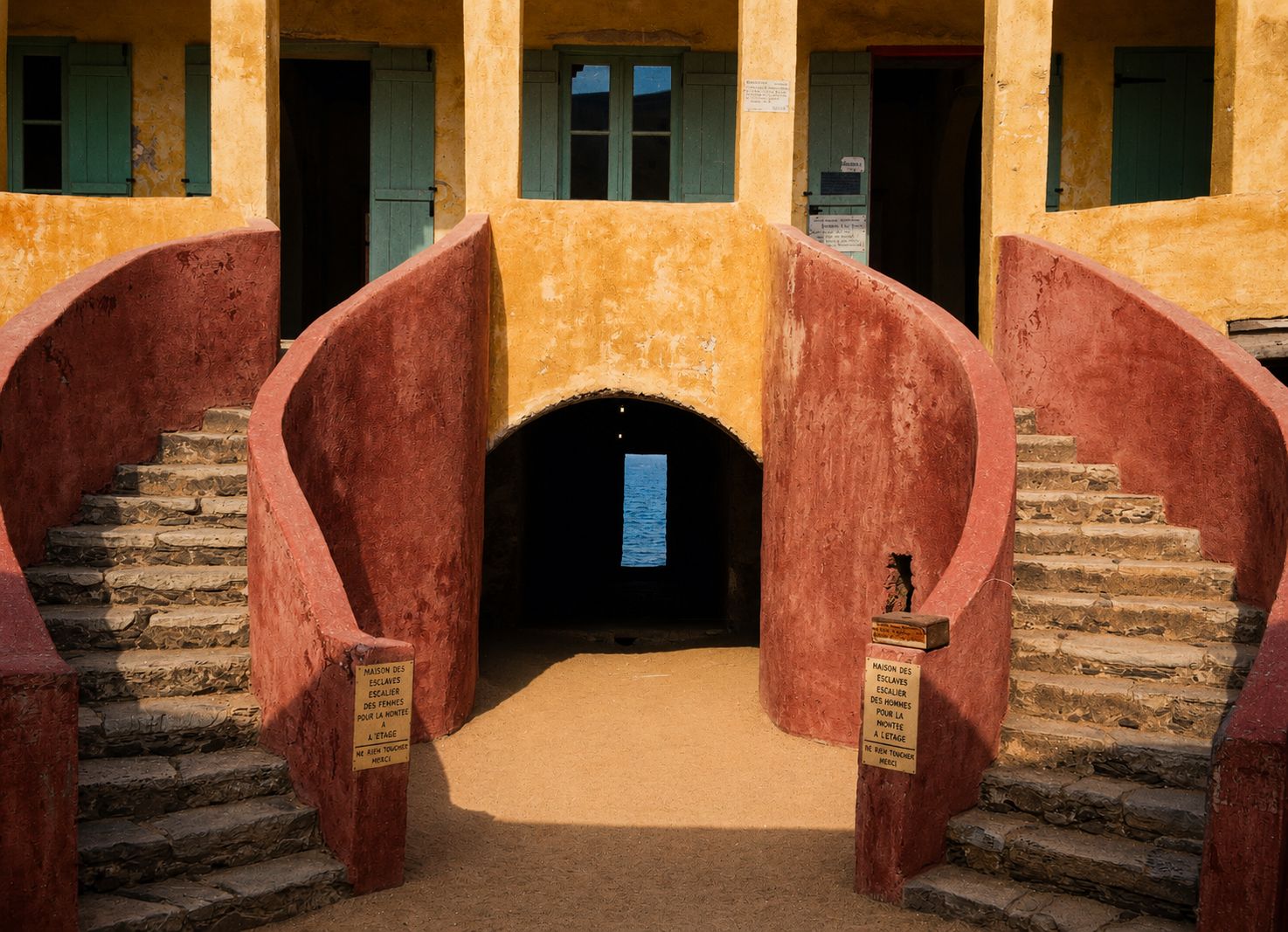
Goree Island
Off the coast of Dakar, Goree is a small island with pastel houses and quiet streets. It also holds the House of Slaves and its Door of No Return, a UNESCO World Heritage site since 1978. The numbers that passed through Goree itself are debated by historians, but its weight as a place of memory is not. Standing in the doorway that opens onto open water is the part most visitors remember. It is deliberately plain. The plainness is the point.
Far to the east, on the coast of Benin, Ouidah was one of the busiest departure points of the entire trade. The Slave Route here runs about 4 km from the town centre to the beach, marked by monuments at each stage of the forced march to the ships.
It ends at the Door of No Return on the shore, a memorial arch facing the Atlantic. Walking the route on foot, in the heat, is the closest a visitor can come to grasping the scale of what happened here.
This is not sightseeing. It is a journey of remembrance, and we treat it that way. Our guides are from the region and speak about this history with care and without performance. For travellers of African descent in particular, the route often carries personal weight. We keep the groups small and the pace unhurried so there is room for that.